
MÉDIC Construction 2027: changes in reimbursements
ConstruMD
Nov 18, 2026
All Posts
SHARE THIS POST
Published : November 5, 2026
When a defect appears after work is completed, two phrases are often heard: "it's guaranteed for one year" and "a contractor is responsible for five years." Both can contain some truth, but they do not refer to the same thing. In Quebec, there is no single universal warranty that covers all renovation issues for the same duration.
To know who should fix what, it's important to distinguish between the written warranty offered by the contractor, the legal warranty against defects, the responsibility related to serious defects that cause the loss of the work, the RBQ license bond, and the new residential building warranty plan.

Article 2120 of the Quebec Civil Code provides a one-year warranty against defects existing at the time of acceptance of the work or discovered within the following year. Article 2118, on the other hand, provides for a five-year responsibility when a design, construction, execution, or soil defect leads to the loss of the work.
An uneven finish, a poorly executed joint, or a misaligned door may constitute a defect without endangering the work. Conversely, a serious problem with waterproofing, structure, or foundation can sometimes compromise the use or solidity of the work and trigger the five-year responsibility. The exact qualification depends on the facts and, in contested cases, on an expert opinion or a court decision.

Acceptance is not simply the moment when the last invoice is paid. According to Article 2110 of the Civil Code, the end of the work occurs when the work is executed and ready to serve its intended use. The client is then required to accept the work.
For a small project, this step can be informal. For significant renovations, it should be documented: final visit, list of work to be completed, visible defects, photos, delivery date, and written confirmations. This record helps distinguish what was apparent at acceptance from what was revealed later.
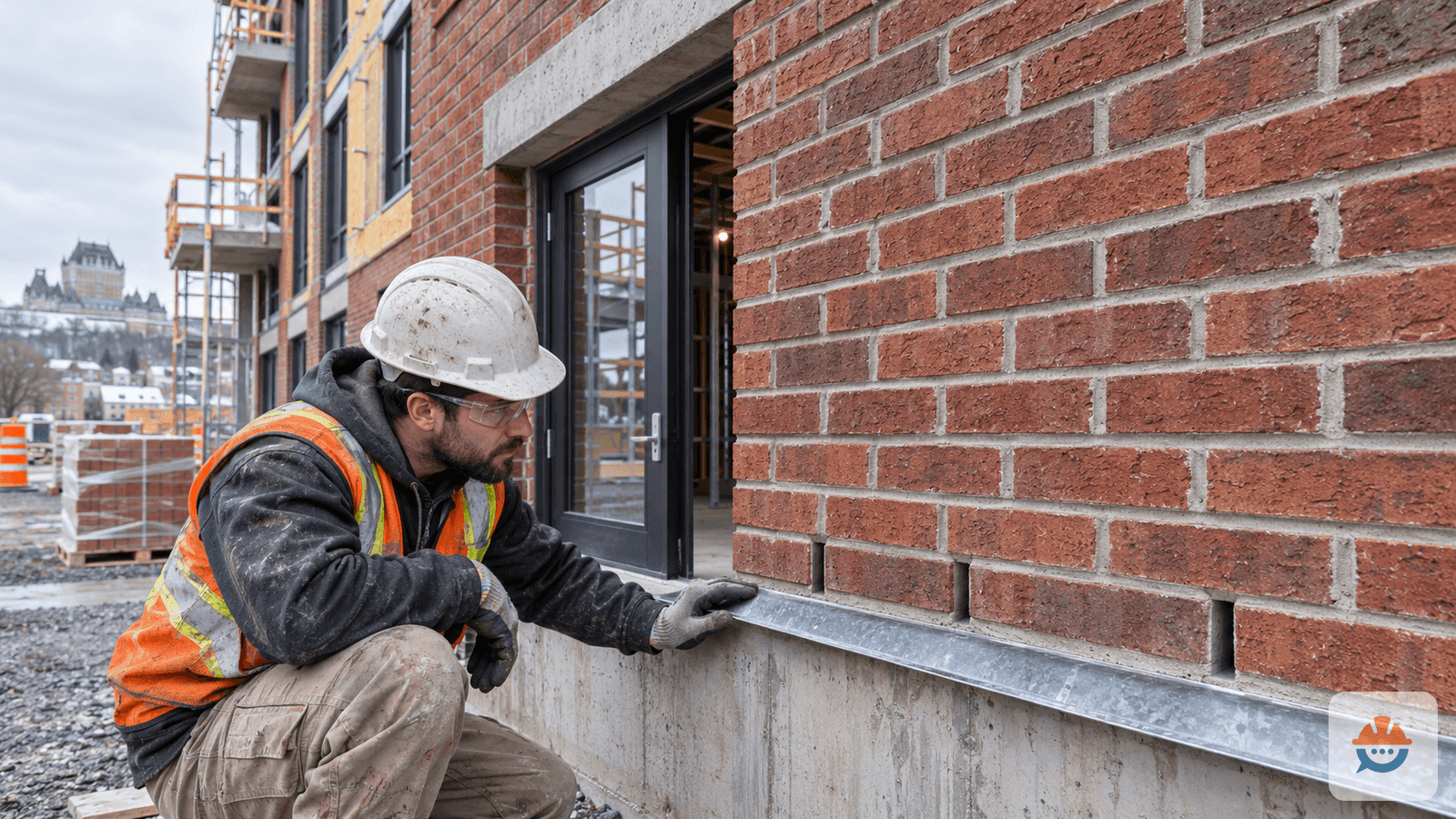
A quality execution inspection does not replace the parties' obligations, but it can turn a vague impression into verifiable observations. It also allows the contractor to quickly correct issues before the defect causes further damage.
Article 2120 of the Quebec Civil Code is straightforward: the contractor, the professionals who directed or supervised the work, and, where applicable, the subcontractor are jointly liable for one year to guarantee the work against defects existing at acceptance or discovered within the following year.
A defect is work executed incorrectly or that does not comply with the contract, the rules of the trade, or applicable standards. The term does not automatically refer to any element the client dislikes. A purely aesthetic difference accepted in the contract is not necessarily a defect; a deficient or non-compliant installation can be.
Possible examples vary: inadequate slope, incomplete sealing, poorly installed material, finish that does not meet the specifications, door that closes poorly due to deficient installation, or tile that comes loose due to poor preparation. The cause must be established, not just the symptom observed.
The text of Article 2120 ties the warranty to the acceptance of the work. This is why the acceptance date must be identifiable. A final invoice, a report, a list of deficiencies, or exchanges confirming the end of the project can become important elements.
Waiting until the end of the year to report a problem is risky. As soon as a defect is discovered, it is prudent to notify the contractor in writing, describe the problem, and allow them to inspect it. The passage of time can worsen the damage and complicate proving its origin.
Article 2118 does not state that every detail of a renovation is "guaranteed for five years." It targets the loss of the work that occurs within five years following the completion of the work and results from a design, construction, execution, or soil defect.
The loss does not necessarily require the complete collapse of a building. Courts may recognize a loss when the work is severely compromised or can no longer serve its normal function. However, this remains a higher threshold than a simple imperfection or a minor finish correction.
This responsibility may concern the contractor, the professional who directed or supervised the work, and the subcontractor for their part. Article 2119 specifies the conditions allowing each to attempt to relieve themselves of this responsibility, particularly when the defect originates from plans provided by a professional chosen by the client or decisions imposed by the client.
Recurring leaks that render part of the building unusable, a structure that deforms, work that becomes dangerous, or a foundation affected by a soil defect can invoke Article 2118. But it would be imprudent to automatically assert that a problem is covered for five years without examining its extent, cause, and the exact scope of the work.
The applicable standards are also evolving. Our guide on the new Construction Code in Quebec explains why the date of the work, the type of building, and the adopted regulations can influence the compliance analysis.
The three-year period is often associated with hidden defects under the mandatory warranty plan for new residential buildings. The regulation of this plan provides for graduated protections, including three-year coverage for certain hidden defects and five years for certain serious defects.
This timeline should not be automatically copied into a renovation contract. Garantie Construction Résidentielle specifies that the mandatory plan targets certain houses and certain new residential buildings built or sold by an accredited contractor. The transformation and renovation of buildings, including several extensions, are among the exclusions presented.
A renovation client may have other recourses under the Civil Code, their contract, or consumer protection rules. This does not automatically transform an ordinary renovation into a project covered by GCR.
A contractor can offer a conventional warranty free of charge or included in the contract. It can promise the correction of certain elements for a given period, specify exclusions, and define a service procedure.
The Office de la protection du consommateur recommends obtaining a copy of the document that describes this warranty or having its terms included in the contract or invoice. A phrase like "one-year warranty" is too vague if it does not explain what is covered, the starting point, exclusions, or how to make a claim.
For the contractor, a clear warranty reduces misunderstandings. It should distinguish between labour, materials provided by the company, products covered by a manufacturer, normal maintenance, wear and tear, and damage caused by subsequent intervention.
An RBQ license confirms that the company holds the required subcategories and has met the applicable qualification conditions. It does not mean that the RBQ will inspect every renovation or automatically reimburse all defects.
However, the RBQ requires a license bond. According to the RBQ, this bond aims to compensate clients for certain damages related notably to deposits, non-completion, defects, and defects discovered within a year following the completion of the work. It is a regulated financial mechanism, not a general warranty without conditions.
Before signing, the client should verify the license and subcategories in the register, the existence of the company in the Enterprise Registrar, and the information available from the Office. The Office also recommends a detailed written contract specifying the work, materials, dates, price, and required authorization for extras.

Take dated photos and videos. Keep the contract, plans, quote, invoices, product sheets, and exchanges. Write a short timeline: date of appearance, observed conditions, damages, and interventions already carried out.
Describe the defect precisely and request an inspection within a reasonable time. A written message avoids contradictory versions. For an urgent problem, take necessary measures to limit damage, but keep evidence and replaced parts when possible.
The contractor must be able to observe the problem and verify if it is related to their work. The client should not have the work demolished or redone immediately by a third party, except in a real emergency, without giving a reasonable opportunity to inspect and correct.
If the parties do not agree on the cause or severity, an independent professional may be necessary. A formal notice can then specify the facts, the requested correction, and the allowed time. For an important case, legal advice helps choose the right recourse and meet deadlines.
The monitoring of work and compliance certification can improve the traceability of certain projects, but they do not replace a clear contract or the obligation to promptly report a defect.
False. The five-year liability concerns the loss of the work caused by certain defects. A minor defect does not automatically reach this threshold.
False. The expiration of the warranty under article 2120 does not automatically eliminate all other possible liabilities. The nature of the defect, the contract, the severity, the date of discovery, and other Civil Code rules must be analyzed.
False. The license is an authorization to practice. The associated bond may offer compensation in certain circumstances and according to a specific procedure, but it does not replace a complete warranty.
False. The mandatory plan targets specific categories of new residential buildings. An ordinary renovation of an existing building does not automatically fall under it.
A useful warranty clause indicates the promised duration, the starting point, the work and materials covered, the exclusions, the required maintenance, the claim procedure, the inspection period, and the method of correction. It should also avoid suggesting that it erases the responsibilities provided by law.
The company should keep the plans, before/after photos, technical sheets, approvals for extras, and proof of receipt. This documentation protects the client, but also the contractor when damage results from a lack of maintenance, third-party intervention, or a pre-existing condition not included in the contract.
For renovation work in Quebec, remember four key points. A written warranty must be read according to its actual content. Article 2120 provides a one-year warranty against certain defects related to reception. Article 2118 provides a five-year liability for the loss of the work caused by certain serious defects. Finally, the RBQ license and bond, as well as the GCR plan, are distinct mechanisms.
The best protection remains documented reception, a precise contract, and a written notice sent promptly when a problem arises. This article presents general information; a significant dispute or a defect affecting safety, structure, or habitability should be evaluated by a qualified professional and, if necessary, by legal counsel.
You might like
ConstruMD
Nov 18, 2026
ConstruMD
Nov 15, 2026

ConstruMD
Nov 11, 2026