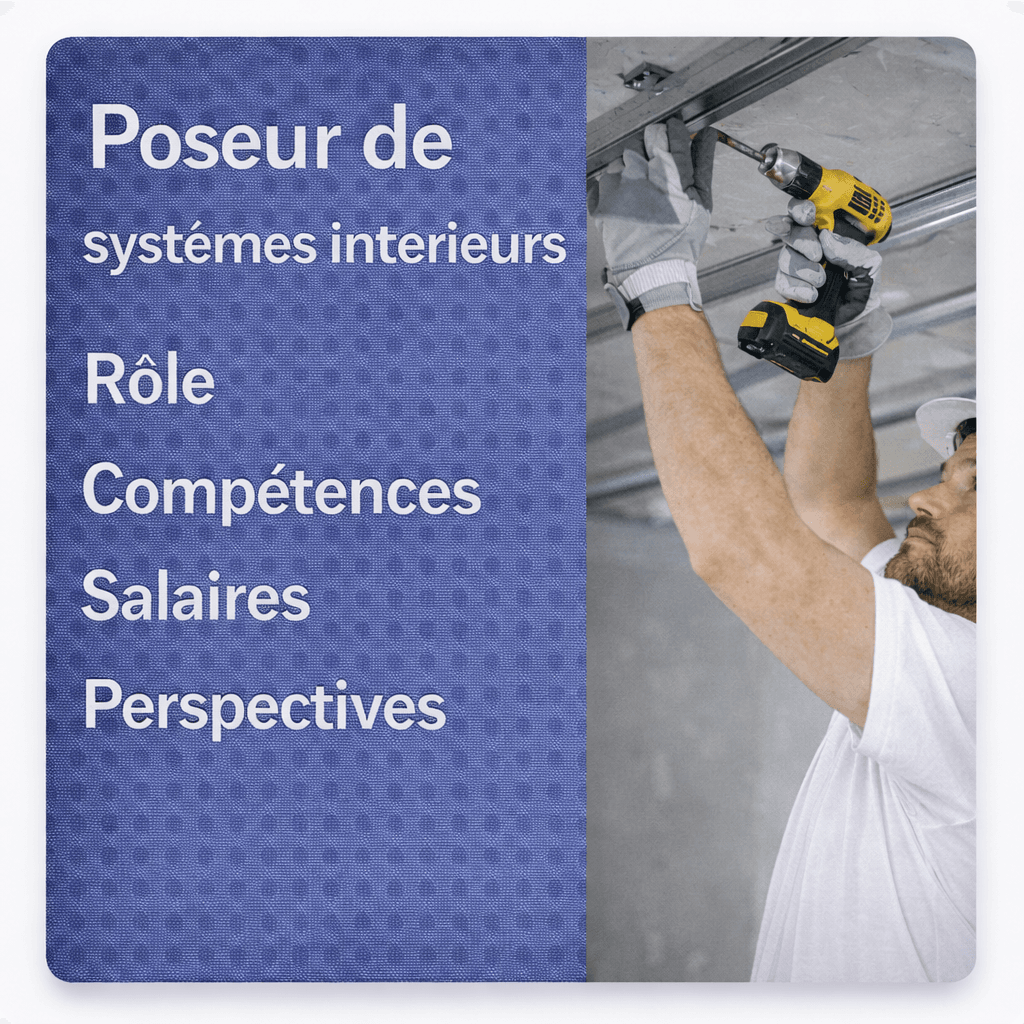
Interior Systems Installer: Training, Salary, Tasks
ConstruMD
Nov 5, 2026
All Posts
SHARE THIS POST
Published : November 5, 2026
The profession of plumber (or plumberess, of course) is a stable career and quite sought after in Quebec. Plumbing professionals handle piping systems, install heating equipment, and ensure the maintenance of installations in residential or commercial buildings. To see open positions, check out the pipefitter (plumbing) jobs on ConstruMD.
To enter the profession, there are several plumbing and heating training paths. The sector requires quite specific technical skills, but there are also opportunities to move into supervisory positions or even start your own business.

You work all over the place: houses, buildings, businesses, factories, construction sites... The routine? Installing and repairing plumbing systems for potable water and drainage.
You also install hot water heating systems. With the right certification, you can even work with natural gas or propane.
You choose between new construction or renovation, depending on what interests you. Some specialize in heating, others in sprinklers or instrumentation.
Days are quite varied. One morning you install a water heater, in the afternoon you rush to fix a leak, and the next day, it might be starting up a heating system.
You use manual and power tools daily. Reading plans and finding solutions to piping or drainage issues is part of the job.
Here are the types of tasks you regularly perform as a plumber or plumberess:
Installation and Repair
Install piping for cold water, hot water, and drainage
Install toilets, sinks, showers, and water heaters
Install boilers, pumps, and radiators for heating

Working with Materials
Cut, bend, and assemble pipes made of copper, PEX, steel, or PVC
Weld joints to ensure watertightness
Set up drainage systems according to codes
Verification and Diagnostics
Test pressure on installations
Identify the cause of blockages, leaks, or circulation problems
Ensure everything works before leaving
Documentation and Safety
Read plans and comply with building codes
Follow mandatory safety standards
Write reports and discuss with clients
Sometimes, you need to be on call for evening or weekend emergencies. It's part of the job.
The Diploma of Vocational Studies (DEP) in plumbing and heating is the classic path to practice in Quebec. This program covers plan reading, building codes, and installation techniques.
If you're aiming for project management or estimation positions, a technical DEC in building engineering can be useful. It's not mandatory to become a plumber, but it opens other doors.
A bachelor's degree in building engineering is for those who want to move towards design or engineering. This degree does not lead to journeyman plumber status, but it can be useful for management positions.
To work on sites regulated by the CCQ, you need the apprentice competency card. The Commission de la construction du Québec manages this qualification.
The qualification certificate from the Ministry of Employment is also required to practice legally. The Red Seal allows interprovincial mobility, which is handy if you want to move.
The DEP in plumbing and heating lasts 1,680 hours. Generally, it takes 16 to 18 months full-time, depending on the centre's schedule.
You also need to take the general health and safety course on construction sites (30 hours). This ASP Construction training is mandatory to set foot on a site: General health and safety course on construction sites (30 h).
The apprenticeship totals about 8,000 hours after the DEP, spread over four years. You progress through four periods, with qualification exams and salary increases at each stage.
Summary of Steps:
| Step | Duration |
|---|---|
| DEP in plumbing and heating | 1,680 hours (16-18 months) |
| Health and safety training | 30 hours |
| CCQ apprenticeship program | 8,000 hours (4 years) |
If you already have experience, recognition of prior learning and skills can speed up the process. It's really handy if you've worked in the field before.
There are quite a few vocational training centres in Quebec offering the DEP in plumbing and heating. To find a cohort near you, check AdmissionFP or Inforoute FPT.
Well-known Centres:
École des métiers et occupations de l’industrie de la construction de Québec (Quebec)
Centres in Outaouais with the program
Institutions in Lanaudière, Mauricie, and Montérégie
Contact Emploi-Québec or check Inforoute FPT for admission dates. Registrations vary by region and demand.
If you want to become an entrepreneur, you will need a license from the Régie du bâtiment du Québec. For that, there are exams in site management and administration.
Installing gas appliances? You need a special qualification. Check with the RBQ and CCQ according to your situation.
As an apprentice plumber, you already earn a salary during practical training. This salary increases with each completed period.
Your salary as a plumber in Quebec greatly depends on the employer and your experience. The sector plays an important role: construction companies under the CCQ pay according to established rates, which differs from employers in renovation or maintenance.
Starting as an apprentice (period 1), you earn $24.19/h. The salary increases with each apprenticeship period: $29.02/h (period 2), $33.86/h (period 3), and $41.11/h (period 4), up to journeyman status.
Journeymen in CCQ construction earn $48.37/h.
In renovation or non-CCQ service, compensation varies more depending on the employer, region, and type of calls (installation vs troubleshooting).
Want to see all the CCQ rates from the 2025–2028 agreement (official dates + amounts) for this trade?
Check out our complete reference: CCQ Rate Chart 2025–2026
| Level | Hourly Rate (CCQ – ICI) |
|---|---|
| Apprentice – Period 1 | $24.19/h |
| Apprentice – Period 2 | $29.02/h |
| Apprentice – Period 3 | $33.86/h |
| Apprentice – Period 4 | $41.11/h |
| Journeyman | $48.37/h |

Quebec clearly lacks plumbers. Job prospects for plumbers are excellent for the coming years.
Why? Aging infrastructure needs major renovations.
Residential and institutional construction projects are not slowing down. The transition to more efficient heating systems also creates jobs.
The shortage of skilled workers makes the trade even more in demand. Employers are constantly seeking trained personnel.
A journeyman plumber must really know how to listen to clients and explain repair options simply. Empathy is needed, especially when an emergency arises at someone's home.
The ability to solve problems quickly is key to diagnosing breakdowns and proposing effective solutions. Working independently also requires being well-organized, both in terms of equipment and schedule.
Communicating clearly with clients and colleagues avoids many misunderstandings on job sites. Stress management is also important, especially during emergency interventions or when time is tight.
Team spirit remains important for coordinating with other building trades. Frankly, no one likes working alone all the time.
You need to know how to read plans and understand the plumbing codes in effect in Quebec. Piping techniques include cutting, bending, crimping, and brazing.
You handle materials like copper, PEX, or steel. Installing sanitary appliances or water heaters is part of the daily routine.
Hydronic systems? They require knowledge of boilers and circulators. You also need to perform pressure tests and commissioning, often with manometers.
Workplace safety is serious. Follow lockout procedures and always wear protective equipment.
Specialized tools like inspection cameras quickly become indispensable for diagnosing issues.
The work of a plumber has its pros and cons. Before you start, it's better to know what to expect.
The positives of the trade:
You'll always find work because plumbers are in high demand in Quebec.
You can become your own boss and start your own business.
No two days are the same; there's variety.
With experience, the salary becomes attractive.
Working with your hands and seeing tangible results is rewarding.
There are opportunities for advancement to foreman or technician.
The negatives to consider:
Sometimes you'll need to work evenings and weekends to make ends meet.
Good physical fitness is essential; the work is demanding.
Workspaces can be tight or complicated.
Expect exposure to water, chemicals, and sometimes difficult conditions.
Emergencies are part of the job; you need to react quickly.
Carrying heavy equipment is common.
You need to be versatile, resourceful, and meticulous. Working alone without constant supervision shouldn't scare you.
Your compensation will depend on your experience, skills, and the region where you work. Those with dual training often have more opportunities.
Installing and repairing plumbing and plumbing equipment is the core of the trade. You also work on wastewater evacuation.
Before you start, talk to an active plumber. Spend a day on a job site to see if you really like it.
Enroll in the DEP in plumbing-heating as soon as you feel it's the right time. Choose a cohort that offers internships or direct contacts with local employers.
Obtain your ASP 30-hour card before the end of the training. This certification is mandatory to quickly access job sites.
Key steps to progress quickly:
Look for an employer offering varied projects in installation and service.
Keep track of all your work hours for your apprenticeship.
Gain diverse experience to aim for journeyman status.
Develop your skills in communication and management.
Think long-term for your career. You could become a specialist in hydronic systems, a team leader, or even an entrepreneur with an RBQ license.
Options to increase your income:
| Specialization | Advantage |
|---|---|
| Complex fault diagnostics | You become indispensable |
| Commercial systems | More lucrative projects |
| High-end residential service | Better customer loyalty |
Specializing in a field is often the key to standing out. Expertise makes you more valuable, especially in the commercial or industrial sector.
What is the difference between a construction plumber and a maintenance plumber?
A construction plumber works on regulated sites by the CCQ. The competency card is mandatory in this sector.
Working conditions follow collective agreements. You often work in teams on large new projects.
A maintenance or renovation plumber works with residential or commercial clients. No CCQ card is needed here, but you must enjoy troubleshooting and variety.
Salary depends on the employer, so it can vary. This type of work appeals to those who like autonomy and customer interaction.
Can I specialize in a particular field?
Yes, you can focus on hydronic heating, such as boilers or heated floors. This specialty is in demand, especially in high-end projects.
You develop this expertise with field experience and manufacturer training. An experienced journeyman can also help you progress.
This specialization increases your potential income. Sometimes, it leads to supervisory positions.
Do I need a certificate to work on gas?
Yes, specific skills and certificates are required to install or maintain gas appliances. Requirements change depending on your intervention and sector.
Always check RBQ rules before accepting a gas contract. Sites may also have additional requirements via the CCQ.
Is the profession accessible to adults in career transition?
The DEP is open to adults in career transition. Several centres offer flexible schedules or mid-year admissions.
Recognition of prior learning can validate your skills if you come from a related field. For example, HVAC or mechanics can provide credits.
Check AdmissionFP to find a program near you. Inquire about recognition of prior learning at your centre.
How can I become a plumbing contractor?
First, gain a few years of experience as a journeyman. An RBQ contractor's license is mandatory to work independently.
You will need to pass exams on management and administration. The exams also cover subcategories related to your specialty.
You will need to set up your insurance and accounting system. A solid business plan is really useful to get started.
The initial investment includes a vehicle and professional equipment. A good network and impeccable customer service make the difference.
What is the NOC code for plumbers?
In Quebec, the NOC code for plumbers is 72300. This code is used to classify the profession in government employment systems.
Do I have to choose between construction and maintenance from the start?
Not necessarily. You can start in one sector and switch later.
Your DEP training prepares you for both types of work. Many plumbers try both before choosing.
Your choice will depend on your preferences and goals.
Are salaries better in construction or maintenance?
In construction, hourly rates are set by collective agreement. These rates are often higher.
In maintenance, negotiation is directly with the employer. Income can rise quickly if you develop a loyal clientele.
How long does it take to become a journeyman?
After your DEP, you need to accumulate work hours. The duration depends on the sector and your practical experience.
In construction, the CCQ validates the hours. The transition from apprentice to journeyman also requires a qualification exam.
You need to obtain a qualification certificate to practice legally. The plumbing profession is regulated in Quebec, so you need a valid license: mandatory qualification certificate – plumbing (Québec.ca).
Technical skills in installing and repairing plumbing systems are essential. Knowing how to read plans and understanding safety standards is also crucial.
You can start with a diploma of vocational studies in plumbing-heating. This diploma opens the door to construction sites, where most plumbers work.
Then, you must enroll in the plumbing apprenticeship program. This step is mandatory to obtain your professional certification.
The diploma of vocational studies (DEP) in plumbing-heating is the main one. The training is both practical and theoretical.
The qualification certificate is the official document that allows you to practice. You must pass an exam to obtain it.
The DEP program usually takes between 15 and 18 months. It really depends on the institution and your pace.
You also need to complete on-the-job training hours. This part, honestly, can stretch over several years depending on your situation.
Yes, practical training is essential if you want to work as a plumber.
You will accumulate supervised work hours with experienced plumbers. This experience, in fact, is mandatory before attempting the qualification exam.
To start, you need to complete your training. Then, there are the apprenticeship hours to complete, which can take some time.
After that, you will need to pass a professional qualification exam. It's not necessarily easy, but it's doable if you are well-prepared.
The exam lasts three hours and consists of 61 questions. To pass, you need to score at least 60%: information sheet – Plumber exam (CCQ).
The main steps are:
Complete your training
Accumulate your apprenticeship hours
Pass the qualification exam
Receive your official certificate
If you already have plumbing training from your home country, it is possible to have your skills recognized. However, you will still need to pass the Quebec Construction Commission exam. It may seem a bit intimidating, but it's a necessary step.
You might like
ConstruMD
Nov 5, 2026
ConstruMD
Nov 5, 2026
ConstruMD
Nov 5, 2026