
Interior Systems Installer: Training, Salary, Tasks
ConstruMD
Nov 5, 2026
All Posts
SHARE THIS POST
Published : November 5, 2026
The profession of crane operator in Quebec attracts those who enjoy working at heights and handling lifting machinery on construction sites. Here, you control mobile cranes or tower cranes to move heavy materials with precision.
Specialized training is required to pursue this profession, and job prospects are strong in construction. In this guide, we cover training, skills, responsibilities, and what the job looks like on a daily basis — and if you want to see what's currently being posted, you can also check out crane operator jobs in Quebec.
Depending on the class targeted, candidates can compare available Class A crane operator jobs and Class B crane operator jobs in Quebec.

You operate lifting equipment on construction sites to safely move heavy materials. Every day, you work as part of a team with signalers, supervisors, and ground crew.
Your job depends on the type of equipment used. Tower crane operators often work from a perched cabin (or sometimes from the ground, depending on the controls) — a good overview of the profession is available via the Red Seal (tower crane operator) description.
With a mobile crane, you often need to move between different sites, stabilize the machine, level it, and then prepare the equipment before each use. Then, you lift steel, concrete, panels, or industrial equipment: each lift requires serious planning.
You consult load charts, check the weather, and watch out for hazards like power lines. Communication with the signaler is done via radio or hand signals: it's essential.
The day begins with a thorough inspection of the crane (cables, hydraulics, safety devices, etc.). If a problem arises, everything stops: no compromises there.
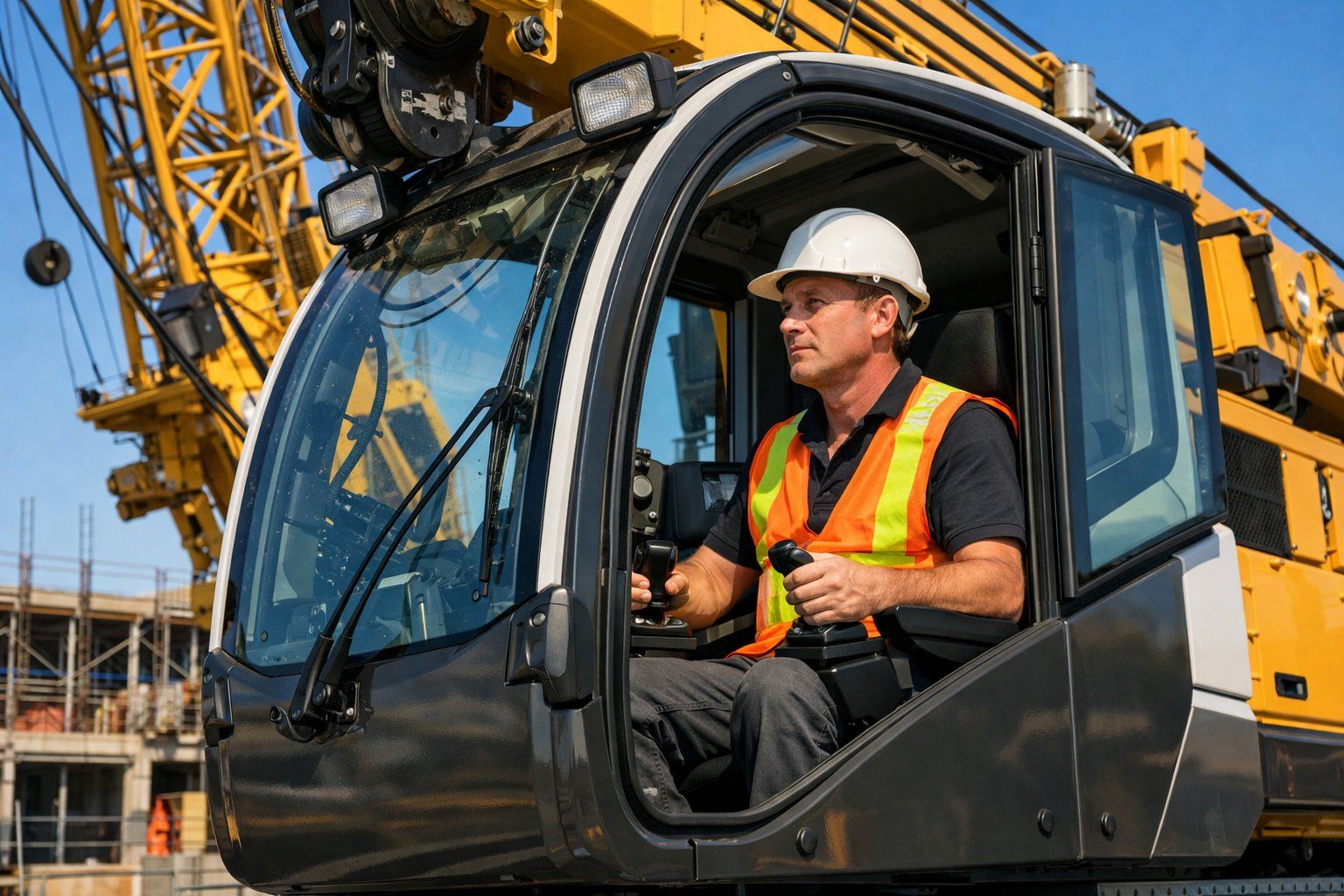
Preparation and Checks:
Inspect the boom crane or truck crane daily
Check cables, hooks, load limiters
Verify the anemometer and, if necessary, anti-collision systems
Stabilize and level the crane before starting
Ensure the ground is solid and the cribbing is correct
Lifting Operations:
Read lift plans and load charts
Estimate the weight and center of gravity of loads
Work with the signaler, according to standards
Control the self-propelled crane with precision
Safety and Environment:
| Responsibility | Description |
|---|---|
| Weather assessment | Monitor wind and visibility |
| Obstacle detection | Spot power lines and structures |
| Rule enforcement | Follow safety rules at all times |
| Communication | Maintain contact with the team |
Administration and Maintenance:
Keep operation logs up to date
Record work hours and inspections
Report any anomalies
Validate slinging with the team
Manage, if necessary, travel permits (mobile cranes)
In Quebec, access to the profession involves procedures and learning overseen by the CCQ to become a crane operator.
Frequently Required Training/Elements:
Health and safety certificate on construction sites (ASP Construction – 30 hours)
CCQ competency certificate (apprentice then journeyman)
Driver's license required depending on the type of mobile crane (depending on the job reality)
Additional training depending on the sites: slinging, signaler, working at heights, first aid
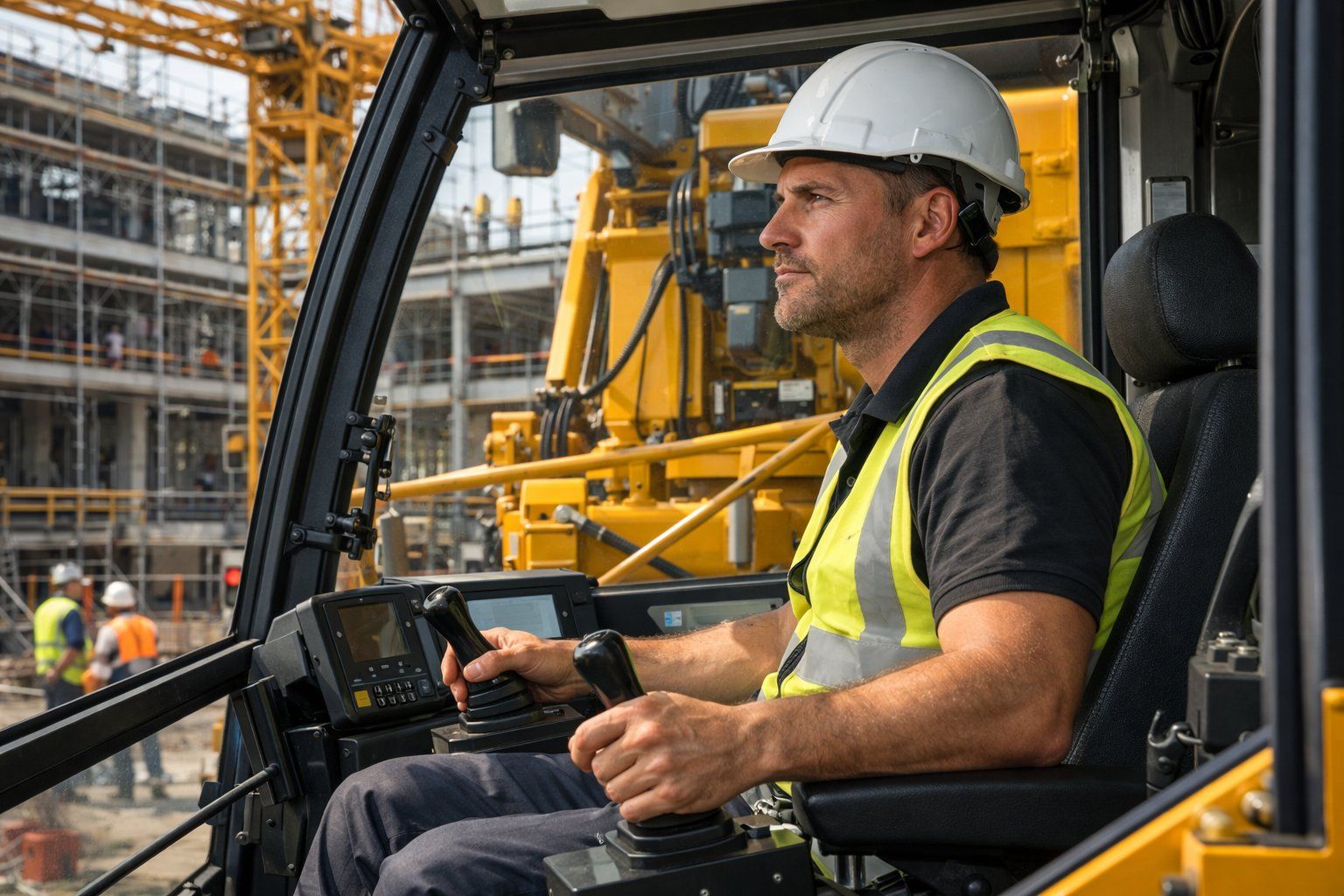
The CCQ also indicates a safe lifting training (120 hours) (theory + practice) in a training center: see the CCQ – crane operators page.
To easily navigate the options, you can also consult the ConstruMD guide on construction training centers (Montreal and surroundings), as well as the educational prerequisites by trade (useful before enrolling in training).
ASP Construction: 30 hours (often completed in a few days)
Safe Lifting Training: 120 hours
Apprenticeship / Site Hours: progression depends on accumulated hours and CCQ pathway (varies by case)
CCQ: procedures, access conditions, apprenticeship, exam — become a crane operator
ASP Construction: mandatory health-safety training (before site work)
CNESST: prevention and rules around cranes, notably the page on mobile cranes (CNESST)
Québec.ca : job profile and general information on crane operators
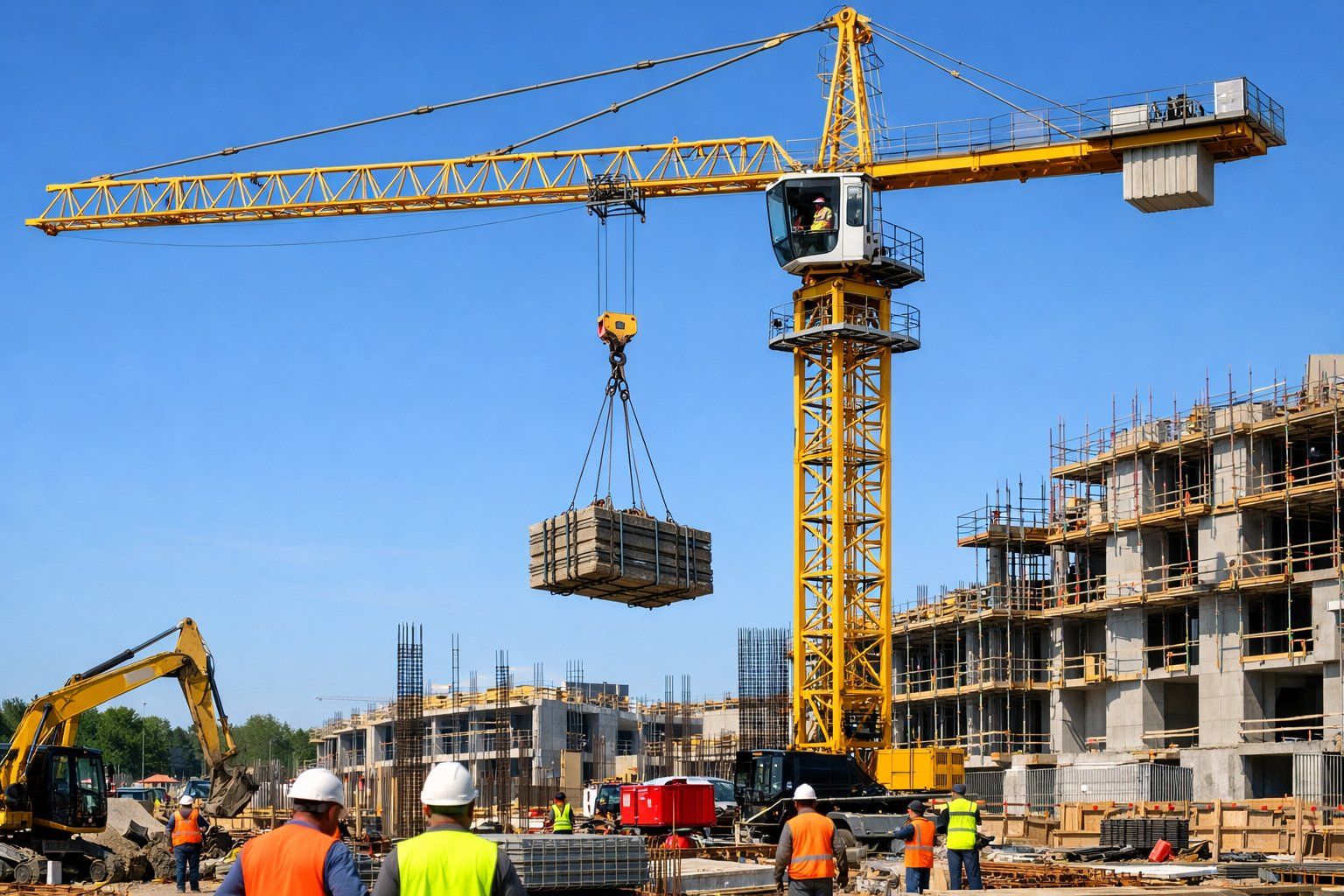
Compensation varies by sector, region, and level (apprentice vs. journeyman). In practice, an apprentice sees their rate increase as they progress, and a journeyman reaches a higher rate once qualified.
For a general benchmark, you can consult the ConstruMD guide on construction salaries in Quebec (2025).
See all the CCQ rates from the 2025–2026 agreement (official dates + amounts) for this profession?
Check our complete reference: CCQ Rate Chart 2025–2026
The demand remains high in Quebec, especially with infrastructure projects and large-scale construction sites. For an overview of the jobs that are hiring heavily, you can see the construction jobs that are most in demand in Quebec.
And if you want to move from guide to action, the simplest way is to look at the crane operator job offers and compare regions/types of sites.
Know when to stop an operation if it becomes risky
Clear communication (radio + hand signals)
Composure, thoroughness, and a sense of responsibility
Ability to "read" the site in 3D (trajectories, risk zones, angles)
Read load charts and respect limits
Stabilize/level according to the ground
Understand rigging (angles, types of slings, control)
Apply prevention rules and safety distances (CNESST)
Strengths: mobility, quick setup, versatility across multiple sites.
Constraints: need for stable ground and space for stabilizers, logistics of movement.
Strengths: ideal for long-term and high-rise sites, large site coverage.
Constraints: heavier installation/dismantling, significant planning, often operated at height.
Start with the ASP Construction (30 h): it's the foundation before setting foot on a site.
Aim for initial experience on sites where you can get involved in lifting (assistant, signaler, lifting team), then progress with the CCQ path.
To understand the "system" (cards, steps, hours), keep the guide handy: how to obtain your CCQ competency card (2025).
A tower crane remains fixed on the site for the duration of the work (often in urban areas). A mobile crane moves on a truck or tracks and is widely used in industrial, commercial, and civil engineering.
Each crane has wind limits defined by the manufacturer. When it exceeds the limit, lifting operations are stopped, and the equipment is secured.
Yes, but you must first complete the ASP (30 h), then progress via the CCQ. To situate yourself if you are coming from outside or changing fields, the guide starting in construction in Quebec (newcomers) can help.
Yes. There are measures and programs aimed at facilitating access and diversity — see CCQ 2025 rules related to access and diversity.
The process goes through the CCQ: they evaluate your background and indicate the next steps based on your file. Starting point: CCQ – crane operators.
You might like
ConstruMD
Nov 5, 2026

ConstruMD
Nov 5, 2026

ConstruMD
Nov 5, 2026