
Interior Systems Installer: Training, Salary, Tasks
ConstruMD
Nov 5, 2026
All Posts
SHARE THIS POST
Published : November 5, 2026
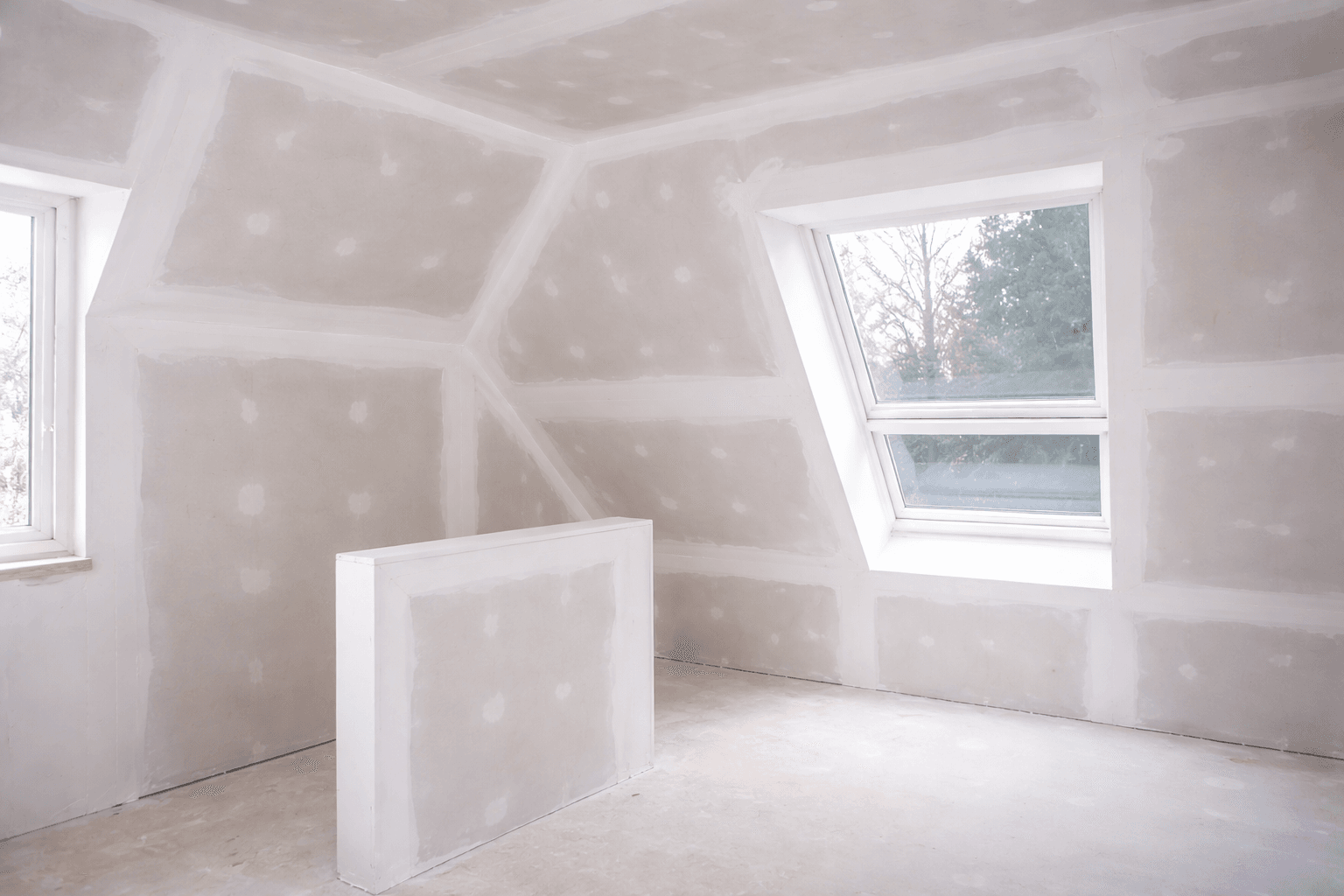
The plasterer (often called "joint puller" on the job site) arrives at the right time: after the gypsum is installed, before painting and finishing. It is they who make the joints disappear, correct defects, and deliver surfaces ready for finishing.
It is a job of production and precision: you work quickly, but you cannot afford to be approximate. A poorly finished surface stands out immediately once painted.
If you want to explore other trades and occupations on the job site, the page Construction Trades and Occupations in Quebec provides a good overview.

The plasterer prepares and finishes surfaces (mainly gypsum) by applying tape, compound, and coatings, then sanding and retouching until a uniform surface is achieved. Depending on the type of site, they may also make repairs (cracks, holes, touch-ups) and end-of-project retouches.
To see open positions, check the plasterer job listings on ConstruMD.
Prepare work areas (protect floors, corners, frames, circulation).
Mix products, organize tools, plan sequences by rooms/floors.
Pull joints (tape + coats), do corners and angles, correct defects.
Let dry, sand, retouch, then deliver a "paint-ready" surface.
Return for touch-ups at the end of the project (impact, micro-cracks, adjustments).
Prepare surfaces and identify defects (bumps, hollows, joints that "show").
Apply tapes, apply coats, and create corners/angles.
Sanding and finishing: aim for a straight surface, without waves or visible lines.
Repair and retouch quickly, without degrading the rest of the surface.
Maintain a clean and safe environment (dust, falls, tools).
| Safety | Operations | Administration |
|---|---|---|
| Dust control and respiratory protection if required | Sequence rooms and manage drying times | Follow the list of touch-ups and priorities |
| Work at height (ladder, platform) | Prepare mixes according to the stage | Communicate with the foreman and other trades |
| Good storage to avoid falls and breakage | Ensure consistent quality in production | Note problematic areas to be redone |
On regulated sites, access is generally through a structured entry path (apprentice status, progression, then journeyman). In practice, what makes the difference at the start is being trainable, consistent, and safe.
A solid foundation can come from recognized plastering training, such as the Plastering program. This training mainly helps to understand the steps, tools, products, and finishing standards.
Progression typically occurs through apprenticeship periods, then towards journeyman status:
| Stage | What you develop on the field |
|---|---|
| Apprentice – Period 1 | Basics: taping, first coats, preparation and cleaning |
| Apprentice – Period 2 | Corners/angles, ceilings, stable quality in production |
| Apprentice – Period 3 | Advanced finishing, speed + consistency, effective touch-ups |
| Journeyman | Complete autonomy, quality control, performance, and organization |
Recognized training: Plastering
Job description (practical benchmarks): Plasterer (CCQ Relève)
Health and safety on site (general training): ASP Construction
Dust prevention (silica and best practices): Crystalline Silica (CNESST)
To compare the job with other positions and levels, you can also check the page construction salaries in Quebec.
| Level | Hourly Rate |
|---|---|
| Journeyman | $46.01/h |
| Apprentice – Period 1 | $27.61/h |
| Apprentice – Period 2 | $32.21/h |
| Apprentice – Period 3 | $39.11/h |
Want to see all the CCQ rates of the 2025–2028 agreement (official dates + amounts) for this trade?
Check our complete reference: CCQ Rate Chart 2025–2026
The prospects are excellent for plasterers. The trade is driven by a constant demand for finishing and the need for new workers on the field.
Available benchmarks:
Active employees: 2,392
Average annual needs: 227
Observed trends: slight increase in employment and significant aging of the workforce.
Meticulousness: finishing does not forgive.
Rigour: same standard from start to finish of the day.
Endurance: repetitive work (arms/shoulders), uncomfortable positions, ceilings.
Composure: touch-ups and tight deadlines.
Team spirit: you are at the heart of the sequence (before painting/finishing).
Read a surface: quickly detect bumps/hollows and anticipate touch-ups.
Master the steps: tape, coats, corners, drying, sanding, touch-ups.
Use tools effectively (knives, boxes/angles, sanders, vacuuming).
Work cleanly: dust management and area protection.
Maintain consistent quality at a high pace.
Advantages
Visible result: good finishing is immediately noticeable.
A trade where experience quickly translates into speed and quality.
High demand for reliable and consistent workers.
Disadvantages
Dust and sanding: can be demanding if methods are not good.
Physical and repetitive work (arms, shoulders, neck, knees).
Production pressure: large surfaces, little time, end-of-project touch-ups.
Don't sacrifice quality to save 10 minutes: you'll lose them in touch-ups.
Follow your sequence (corners/ceilings/walls) to avoid hindering yourself.
Control dust from the start: it protects your health and your finish.
Keep your tools clean: a dirty blade creates lines and unnecessary trouble.
Before leaving an area: check it as if the paint was already done.
In the field, the term "plasterer" is often used to refer to joint finishing and drywall finishing work. The core of the job remains surface preparation and finishing.
It can be: repetitive movements, ceilings, awkward positions. Good technique, good tools, and a good pace greatly reduce wear and tear.
Both are possible. Plasterers work in residential (houses, multi-unit buildings) and ICI (schools, businesses, public buildings), depending on the employer and contracts.
To be safe, clean, consistent, and able to keep up the pace while maintaining quality. Speed comes with repetition.
Because bumps, hollows, and lines stand out in contrast. The plasterer's job is to prevent this from appearing at the finishing stage.
By standardizing your steps, keeping your tools clean, reducing rework, and working on your corners/angles as a routine.
Yes, especially during sanding. It's important to apply good dust control practices and use appropriate protection when required.
The easiest way is to monitor active listings and apply as soon as they are posted: plasterer on ConstruMD.
You might like
ConstruMD
Nov 5, 2026

ConstruMD
Nov 5, 2026

ConstruMD
Nov 5, 2026